




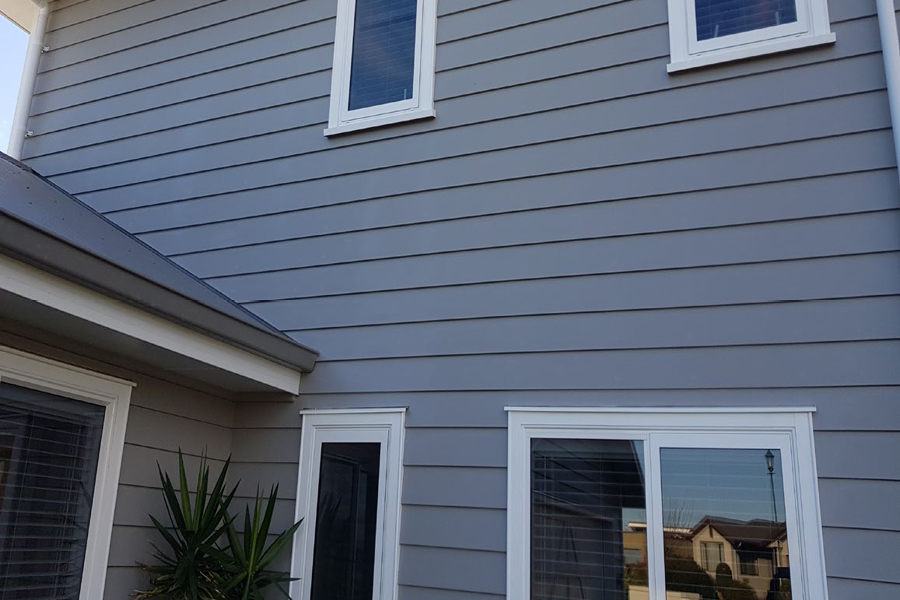
Timber weatherboards should be cleaned on a regular basis and at least once a year, houses situated in a sea spray zone should be checked and could require washing twice to three times a year. Particular attention should be paid to soffits and overhangs. Allowing mould, fungi and marine salts to build up by not washing could have a detrimental effect on both the paint and the timber substrate.
When maintenance is required, use a premium primer and premium undercoats followed by the topcoat using the same paint as originally used. If small paint or substrate defects appear these should be repaired early to prevent further unnecessary degradation to the substrate.
As timber weatherboards are a natural product you could experience some movement, if this occurs you should make good the affected areas by priming and then re applying with the original topcoat. Timber weather boards are designed to accommodate moisture, thermal and seismic movement in the board laps.
DO NOT use SEALANTS or GLUES between the boards, particularly in the horizontal lap, as this may inhibit the natural expansion and contraction of the cladding. The movement of a building and timber substrates will reduce overtime and settle at a normal equilibrium.
Different sides of the house could face different characteristics, with north facing sides requiring more maintenance. Refer paint manufacture for time frame of repainting of house.
All preparation and painting works should be in accordance with AS/NZS 2311:2017 Guide to the Painting of Buildings
Comments are closed.