




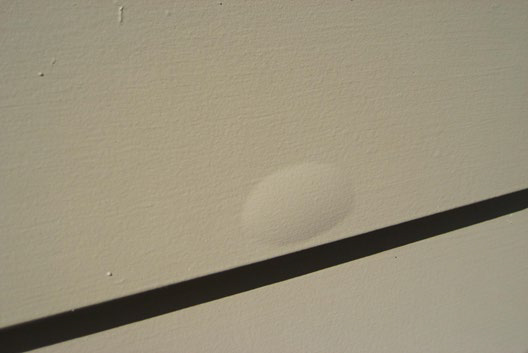
At MPNZA our attention is being drawn, on a regular basis, to failing paint coatings on freshly painted existing weatherboards. We are seeing weatherboards, which when prepared for repainting, the paint coating appears sound. Shortly after completion of the repainting, blistering and peeling are evident. This peeling and blistering goes back through many coats to the original primers when the weatherboard was first painted, often many years before.
The advent of modern acrylic coating systems, with their ability to expand and contract with temperature, places massive tension on previous coats. These previous coats are often many years old and were never intended to last the 30 plus years they have sat on the weatherboard and broadwall areas. The constant expansion and contraction of the new coating results in these older existing coatings delaminating. The use of darker colours exacerbates this tremendously due to the increased heat absorbed by the darker paint coating causing movement in the timber as well as the new paint coating. Also remember that old enamel paint is impervious and will not allow the transfer of vapour to outside of the house, as acrylics will. Thus moisture will build up behind old enamel and also cause the blister, if the enamel is already weakened by the new acrylics applied over the years, bubbling will be worse. Paint manufacturers are able to place greater and greater guarantees on the longevity of their exterior broadwall products because of the flexibility of these modern coating systems. When a paint manufacturer can place a 15 year guarantee on the paint product it is probably not unreasonable for the consumer to expect the paint job to last this long.
Master Painters NZ Association recommends that consideration be given to removing all existing paint coatings from timber weatherboards and any other broadwall surfaces to be repainted that are older than 30 years. While this will increase the cost of repainting to the consumer, failure to remove the existing coating is likely to result in the failure of the new coating with costly ramifications for the painting contractor. It is highly recommended the attention of the consumer should be drawn to this likely problem during the quotation and assessment of the work to be carried out and before any repainting takes place. Testing for lead based coats should be carried out prior to the removal of the paint coating.
Comments are closed.