




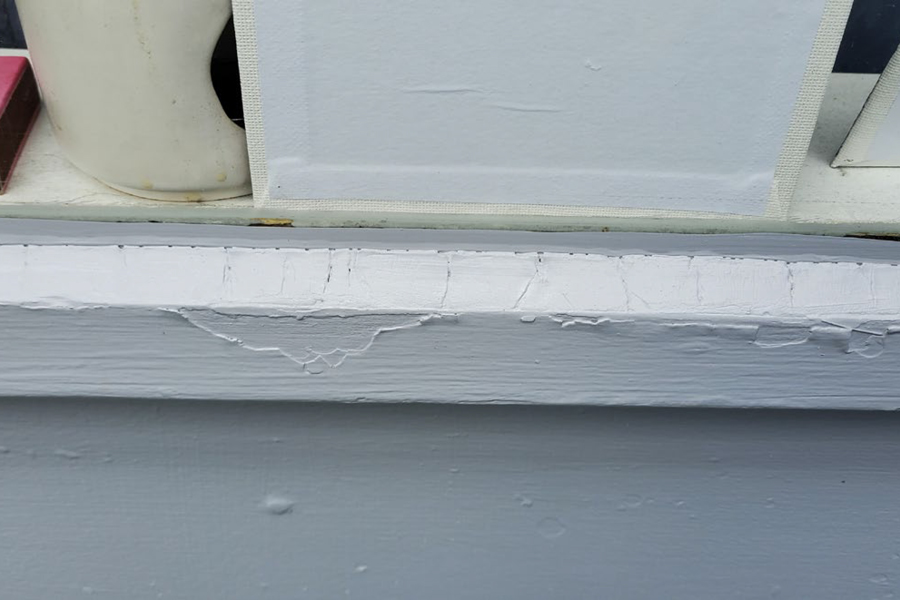
When inspecting painting work for defects AS/NZS 2311:2017 guide to painting of buildings – appendix C, Inspection and Testing, gives clear definitions of defects in paint work consistent with an unacceptable finish. They include:
- the paint coatings applied should have uniformity of finish, colour, texture gloss level, opacity, hiding power, paint film thickness and that the proper number of coats have been applied in the correct sequence and in accordance with specification.
- the paint is free of application defects and blemishes such as paint runs, paint sags, wrinkling, fatty edges, entrained paint skins, bristles from paint brushes, human hair, dust, bare or starved areas, surface cracks, irregular, excessive and coarse brush marks, ladders and blistering or other discontinuities.
- the painted surface should be free from painting defects such as tackiness, brush marks, roller coating marks, spray application defects and irregularities in texture.
- General cleanliness and absence of disfigurement, related to paint application. Surfaces, fixtures and fittings should be checked to ensure that they have been removed or masked, and that all paint spills or stains have been removed.
- the surrounding area is clean, tidy and undamaged and all of the paint contractor’s materials, equipment and debris related to the work have been removed from site.
Note – Differences in appearance will occur; however, where such differences are not clearly discernible from a distance of 1.5 – 2.0 metres the finish is usually considered acceptable. Joinery should also be inspected for the presence of light surface grit or coarse particles which are only identified by touching the surface.
Comments are closed.